
Philosopher’s Stone Changed My Life…
Overview
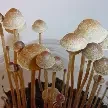
The philosopher's stone mushroom is not a typical mushroom but rather the sclerotia—dense, underground storage structures—produced by Psilocybe tampanensis. These sclerotia are often called "magic truffles" or "philosopher's stones" due to their psychoactive properties and mystical associations. The species was first discovered in 1977 near Tampa, Florida by mycologist Steven H. Pollock, who cloned the single specimen to preserve the strain. Wild sightings are extremely rare, and most contemporary samples come from cultivated lineages.
Appearance
The fruiting bodies of P. tampanensis are small, yellowish-brown mushrooms with convex to conic caps up to 2.4 cm and thin stems up to 6 cm long However, the sclerotia are the main focus for consumption: they appear as dense, irregular nuggets, resembling small earthy truffles rather than conventional mushrooms. These sclerotia are resilient, easy to store, and maintain their psychoactive potency over time.
Psychoactive Compounds and Effects
The sclerotia contain psilocybin, psilocin, and baeocystin, which induce altered states of consciousness, introspection, and visual distortions Users often report:
Deep philosophical insights and heightened self-awareness
Ego dissolution and spiritual experiences
Enhanced creativity and emotional release
Visual effects such as color intensification and geometric patterns
The effects are generally moderate and introspective, making philosopher's stones suitable for beginners or those seeking a thoughtful psychedelic experience
Cultivation and Use
Tampanensis is primarily cultivated for its sclerotia rather than fruiting mushrooms. Sclerotia develop slowly over several months in controlled conditions, often using all-in-one grow kits or shoebox containers with sterilized grain substrates. The cultivation focuses on underground sclerotia production, which is more stable and convenient than harvesting delicate mushroom caps.
Cultural Significance
The nickname "philosopher's stone" draws from alchemical symbolism, representing personal transformation and enlightenment. The mushroom’s introspective effects mirror the mythical philosopher's stone’s ability to transmute base metals into gold, symbolizing spiritual insight and self-discovery… While not historically used in indigenous rituals, it has gained modern cultural relevance in the psychedelic community, particularly in Europe where it is legally sold as magic truffles
In summary, the philosopher's stone mushroom is a rare, cultivated psychedelic fungus valued for its sclerotia, which provide a stable, introspective, and legally accessible psychedelic experience distinct from typical magic mushrooms.